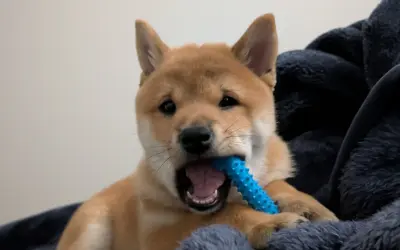
Shiba Mindset
They ask 'What's in it for me?' before complying
Highly Intelligent
Quick learners but easily bored with repetition
Strong-Willed
Natural stubbornness requires patient consistency
Motivated by Rewards
Food-driven but selective about value
Training Approach
5-10 minutes maximum to maintain focus
High-Value Rewards
Use chicken, cheese, or special treats
Positive Reinforcement
AKC recommends reward-based methods
Variety & Fun
Keep training engaging and unpredictable
Foundation Training (8-16 weeks)
- Start house training immediately with consistent schedule
- Introduce crate training for security and house training
- Teach name recognition and basic attention skills
- Begin socialization with positive experiences
Basic Commands (3-6 months)
- Sit, down, and stay with high-value rewards
- Begin recall training in low-distraction areas
- Introduce loose-leash walking fundamentals
- Practice 'leave it' for safety and impulse control
Advanced Skills (6+ months)
- Strengthen recall in distracting environments
- Practice extended stays and distance commands
- Introduce fun tricks and mental stimulation games
- Consider AKC Canine Good Citizen preparation
Essential First Commands
Start with these foundational commands that build your Shiba's training vocabulary and strengthen your bond:
| Command | Why it matters | Notes |
|---|---|---|
| Recall (Come) | Safety and off-leash control | Most critical command - practice daily |
| Leave It | Preventing scavenging and resource guarding | Essential for walks and home safety |
| Loose-Leash Walking | Enjoyable walks and public access | Foundation for good manners |
| Sit/Stay | Impulse control and basic obedience | Building blocks for advanced training |
Shiba Inu Training Best Practices
Do
- Use high-value treats like chicken, cheese, or commercial training treats
- Keep sessions short (5-10 minutes) to prevent boredom
- Practice in various locations to generalize commands
- Be consistent with commands and expectations across all family members
Don't
- Don't repeat commands multiple times - teach one-and-done compliance
- Avoid training when tired, stressed, or frustrated
- Never punish for slow responses - this destroys motivation
- Don't compare progress to other breeds - Shibas have their own timeline
Training Pathways & Next Steps
After mastering the basics, continue your Shiba's training journey with these specialized pathways:
Foundation Skills Pathway
Watch: Reliable Recall Training
Master Loose-Leash Walking
Watch: Stop Pulling on Leash
Advanced House Training
Read: First 30 Days Guide
Advanced Training Pathway
Watch: Brain Games for Dogs
AKC Canine Good Citizen
Learn: CGC Program Requirements
Dog Sports & Activities
Explore: Agility, nose work, rally obedience
Common Challenges & Solutions
Stubbornness: Make training more rewarding than alternative activities. Use higher-value treats and keep sessions engaging.
Selective Hearing: Practice in low-distraction environments first, then gradually increase difficulty. Never let them learn that ignoring commands is an option.
Boredom: Vary training locations, exercises, and rewards. Incorporate games and short play sessions into training.
When to Seek Professional Help
Consider consulting a certified professional dog trainer if you encounter:
- Aggression toward people or other animals
- Severe fear or anxiety that doesn't improve with training
- Resource guarding that creates safety concerns
- Any behavior that concerns you or affects quality of life
- Lack of progress after 2-3 weeks of consistent training
Training Equipment Recommendations
- Treat pouch - for quick reward access during training
- 4-6 foot training leash - avoid retractable leashes for training
- High-value treats - small, soft, and smelly for maximum motivation
- Clicker - optional but excellent for precise timing
- Training treats - Zuke's Mini Naturals, boiled chicken, or cheese cubes
Ready to continue your training journey?
Watch our recommended Shiba Inu training video series or explore puppy development basics for comprehensive Shiba Inu care.
Next step: Practice recall training for 5 minutes daily using high-value treats!